
News
We share our news and views on industry-related events.
News | Rejected homeowners' insurance claims - what you need to know
Rejected homeowners' insurance claims - what you need to know
July 09 2026 By Reliance Insurance Brokers rejected claims, water damage, claims
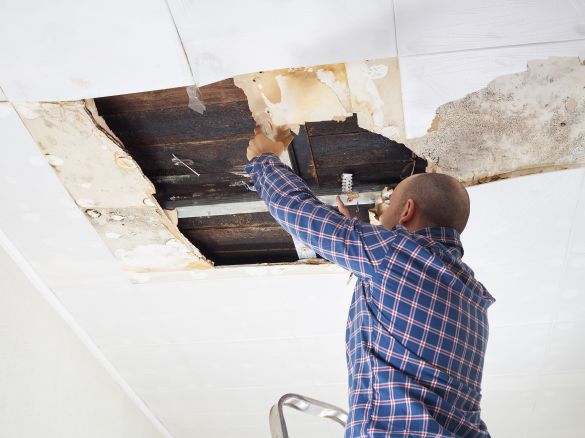
It's a misnomer that insurance is a catch-all for all damages that a home might sustain during the lifetime of an insurance policy. Clients often think that because their homes are covered by insurance, their insurer will automatically pay to repair walls, floors, ceilings, roofs etc. But there's a big difference between a sudden event and a gradual one when it comes to claiming.
The most recent data from the National Financial Ombud Scheme South Africa shows that the primary cause for complaints by homeowners' insurance consumers is the rejection of claims based on 'gradual deterioration, lack of maintenance, or wear and tear.
These claim rejections increased by 17.5% in 2025, making them the leading cause of homeowners' insurance disputes that year. This highlights the growing confusion by homeowners as to what is covered under their properties' insurance policies.
For instance, if a homeowner notices a damp patch on their wall, they assume their buildings insurance will cover the cost to repair the source of the damp and the damaged wall. But in fact, such a claim would ordinarily be rejected.
The reason? Lack of maintenance has allowed the damp to occur in the first place. It didn't occur overnight as a result of a single event. It took weeks, possibly months or even years to reach that stage. The extent of the damage points to the homeowners' lack of intervention right in the beginning (i.e. repairing the source of the damp, like a leaking pipe) to prevent the damage from occurring.
Compare this to a sudden, unexpected burst water pipe in a wall that leads to immediate damage. There was nothing the homeowner could have done to prevent the pipe from bursting (unless it burst as a result of negligence).
In the first instance, the rising damp is described as a gradual event. In the second example, it is described as a sudden event.
The difference between these events being covered or excluded is slight, as both involve water pipes and wall damage. But how the event occurred separates the two events and therefore whether they are covered by a policy or not.
Gradual damage causes include erosion, corrosion, leaks, damp, rust, mildew, rot, building settlement, ageing, and damage caused by pests or vermin. This is damage that occurs slowly over a period of time.
In the case of sudden damage, causes are most often weather related: hail damage, wind storms, flooding, fire damage, building impacts from flying debris or falling trees, damage caused by structural shifting or pipes bursting as a result of earthquakes. Burst water tanks or geysers also fall under sudden damage events.
It's critical that all necessary maintenance is regularly carried out on properties, and vigilance increased during periods where natural events can cause damage, such as during rainy season in Gauteng, storm season in KwaZulu-Natal or fire season in the Cape provinces.
Property owners should also keep a log of maintenance, detailing the date, the work carried out and any receipts or invoices from service providers.
If a homeowner is not at fault and their claim rejected, this log serves as proof of maintenance, and that the event wasn't as a result of negligence.